
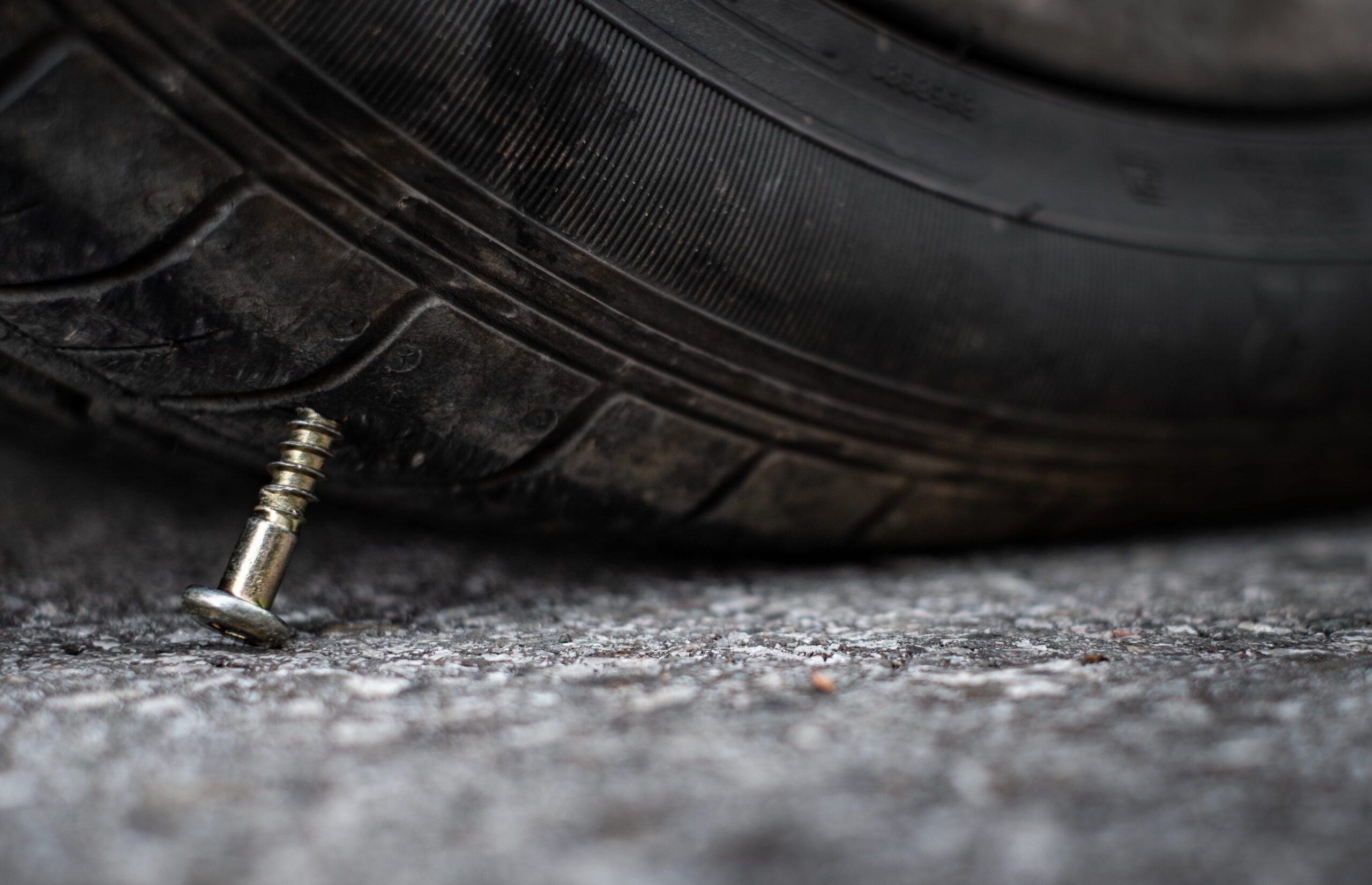
If you have found a screw in your tyre in Timperley, you may be wondering, can it be repaired? In many cases, yes, a tyre with a screw embedded in the central tread area can be safely repaired. However, repair depends on the size, depth, and location of the damage, as well as whether the tyre has been driven while deflated.
Professional inspection is essential before making a decision.
What You Need to Know
Finding a screw in your tyre is one of the most common causes of punctures. When a screw enters the tyre:
- It may seal the hole temporarily
- It may cause slow air loss
- It may lead to rapid deflation
- It may damage internal tyre layers
Sometimes drivers do not notice immediately. You may only become aware when:
- A tyre pressure warning light appears
- You repeatedly top up air
- The vehicle feels unstable
- You hear a faint hissing sound
The position of the screw is critical. Damage within the central tread is often repairable. Damage in the shoulder or sidewall area is usually not.
Should You Remove the Screw Yourself?
If you have found a scre in your tyre, the first step is not to remove it immediately.
Removing the screw may:
- Cause sudden air loss
- Widen the puncture
- Increase internal damage
- Leave you unable to drive safely
If the tyre is still holding pressure, leave the screw in place and arrange an inspection.
If the tyre becomes flat, avoid driving on it. Driving while deflated can damage the internal structure beyond safe repair.
When Can a Tyre Be Repaired?
A tyre with a screw can usually be repaired if:
- The puncture is within the central tread area
- The hole falls within UK repair size guidelines
- The tyre has not been driven while flat
- There is no sidewall damage
- The internal structure remains intact
Professional tyre repair involves removing the tyre from the wheel, inspecting it internally, and applying an approved repair method that seals both the inner lining and tread.
When Does a Screw Mean You Need a New Tyre?
Replacement is usually necessary if:
- The screw has penetrated the sidewall
- The tyre has been driven while flat
- The internal cords are damaged
- There are multiple punctures close together
- The tread depth is already near the legal minimum
In the UK, tyres must have a minimum tread depth of 1.6mm across the central three-quarters of the tyre. If the tyre is already worn, replacement may be the safer option.
Will a Screw in My Tyre Fail an MOT?
A tyre will fail an MOT if:
- The damage exposes cords
- The tyre is unsafe
- The tread depth is below 1.6mm
- Structural integrity is compromised
A professionally repaired puncture within the approved repair zone does not automatically result in failure.
If your MOT is approaching, it is sensible to have the tyre assessed beforehand.
What Should You Do Now?
If you have discovered a screw in your tyre in Timperley and are asking, screw in tyre, can it be repaired, the safest step is to book a professional inspection.
You should:
- Avoid removing the screw
- Check tyre pressure
- Avoid high-speed driving
- Arrange an inspection promptly
A proper assessment ensures you are not replacing a tyre unnecessarily, but also not driving on one that is unsafe.
Why Choose Alloy Boyz & Autos?
Our car workshop in Timperley provides:
- Professional puncture inspection
- Honest advice on repair versus replacement
- Safe tyre repair procedures
- Tyre replacement where required
- Clear explanation before any work begins
Our approach is inspection first. If your tyre can be safely repaired, we explain the process clearly. If replacement is required, we advise transparently.
Speak to an Expert About Tyre Repairs in Timperley
If you have found a screw in your tyre in Timperley and want to know whether it can be repaired, speak to Alloy Boyz & Autos.
We can remove the tyre safely, inspect the damage internally, and confirm whether repair or replacement is appropriate.
Call +447429921066